

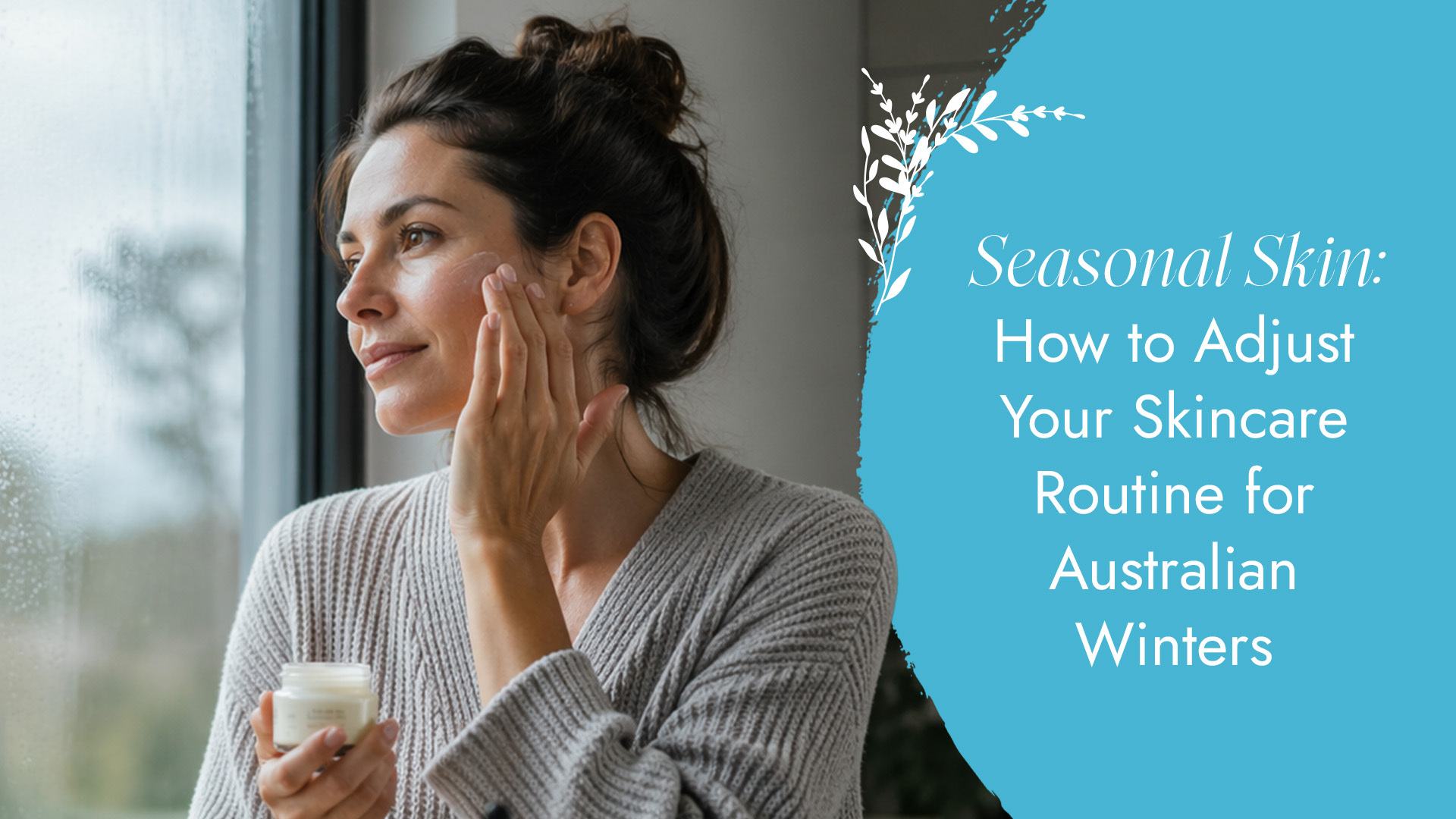
Australian winters might not bring the biting cold that other parts of the world experience, but your skin definitely notices the change. Cooler temperatures, lower humidity, and more time spent indoors with heating can all take a toll on your skin barrier, leaving it feeling drier, duller, and more sensitive than usual.
The good news is that a few simple adjustments to your routine can make a significant difference. Here is how to keep your skin comfortable and glowing through the cooler months.
Even in a mild Australian winter, the air tends to hold less moisture than it does in summer. This drop in ambient humidity means your skin is working harder to retain its own water content. Combine that with indoor heating, which further strips moisture from the air, and you have a recipe for a compromised skin barrier.
A weakened skin barrier shows up as dryness, tightness, flakiness, and increased sensitivity. For people who already have reactive or dry skin, these effects can be more pronounced. Even those with oily or combination skin often find their skin behaves differently in winter.
If you are using a foaming or gel cleanser, winter might be the time to swap it out for something gentler. Foaming cleansers can strip natural oils from the skin, which is fine when humidity is on your side but less ideal when your skin is already struggling to hold onto moisture.
A cream or milk cleanser will remove makeup and impurities without disrupting the skin barrier. Your skin should feel comfortable and balanced after cleansing, not tight or squeaky clean. That tight feeling is actually a sign your barrier has been over stripped.
Winter is the season to embrace layering. Rather than relying on one heavy moisturiser, consider building hydration in steps.
Start with a hydrating toner or essence to prep the skin and add an initial layer of moisture. Follow with a serum containing ingredients like hyaluronic acid or niacinamide, then seal everything in with a richer moisturiser than you might use in the warmer months.
The key is applying your serum while your skin is still slightly damp from the previous step. This helps lock in moisture rather than letting it evaporate.
This one surprises a lot of people. UV radiation is present year round in Australia, and it does not take a hot, sunny day to cause skin damage. UVA rays, which are responsible for premature ageing and long term skin damage, penetrate cloud cover and glass. They are just as relevant on a grey winter day as they are in the middle of summer.
Broad spectrum SPF 50 should be a non negotiable part of your morning routine regardless of the season. If your regular SPF felt too heavy in summer, a lighter formulation or a moisturiser with built in sun protection might suit you better in winter.
If you use active ingredients like retinol, acids, or exfoliants, winter is a good time to reconsider the frequency and strength of your routine. A compromised skin barrier is more prone to irritation, and what your skin tolerated easily in summer may feel too harsh in the cooler months.
This does not mean stopping your activities entirely. It means being mindful and scaling back if you notice increased redness, sensitivity, or flaking. Always follow active ingredients with adequate moisturisation and never skip your SPF in the morning after using them the night before.
Sometimes a seasonal routine refresh is not quite enough, and that is where professional treatments come in. Treatments like hydrating facials, skin boosters, and collagen induction therapy can give your skin the reset it needs coming into or during winter.
Skin boosters in particular are worth considering if your skin feels chronically dehydrated or dull. They deliver hyaluronic acid directly into the skin, providing deep hydration that lasts for months and that no topical product can replicate.
Winter is also a great time for treatments that require some sun avoidance during recovery, since you are naturally spending less time in direct sunlight. Treatments like microneedling or certain skin rejuvenation options can be easier to manage when the UV load is lower.
To summarise, here are the small changes that can make the biggest difference to your skin this winter. Swap to a gentler cleanser that does not strip your barrier. Layer your hydration products starting with lighter textures and finishing with a richer moisturiser. Keep wearing your SPF every morning without exception. Reduce the frequency of harsh activities if your skin shows signs of sensitivity. And consider booking a professional treatment to give your skin a deeper boost.
At Iluminara Aesthetic, we love helping our clients adapt their skin care approach as the seasons change. Whether you need product advice or are ready to explore a professional treatment, we are here to help. Get in touch to book your consultation.