

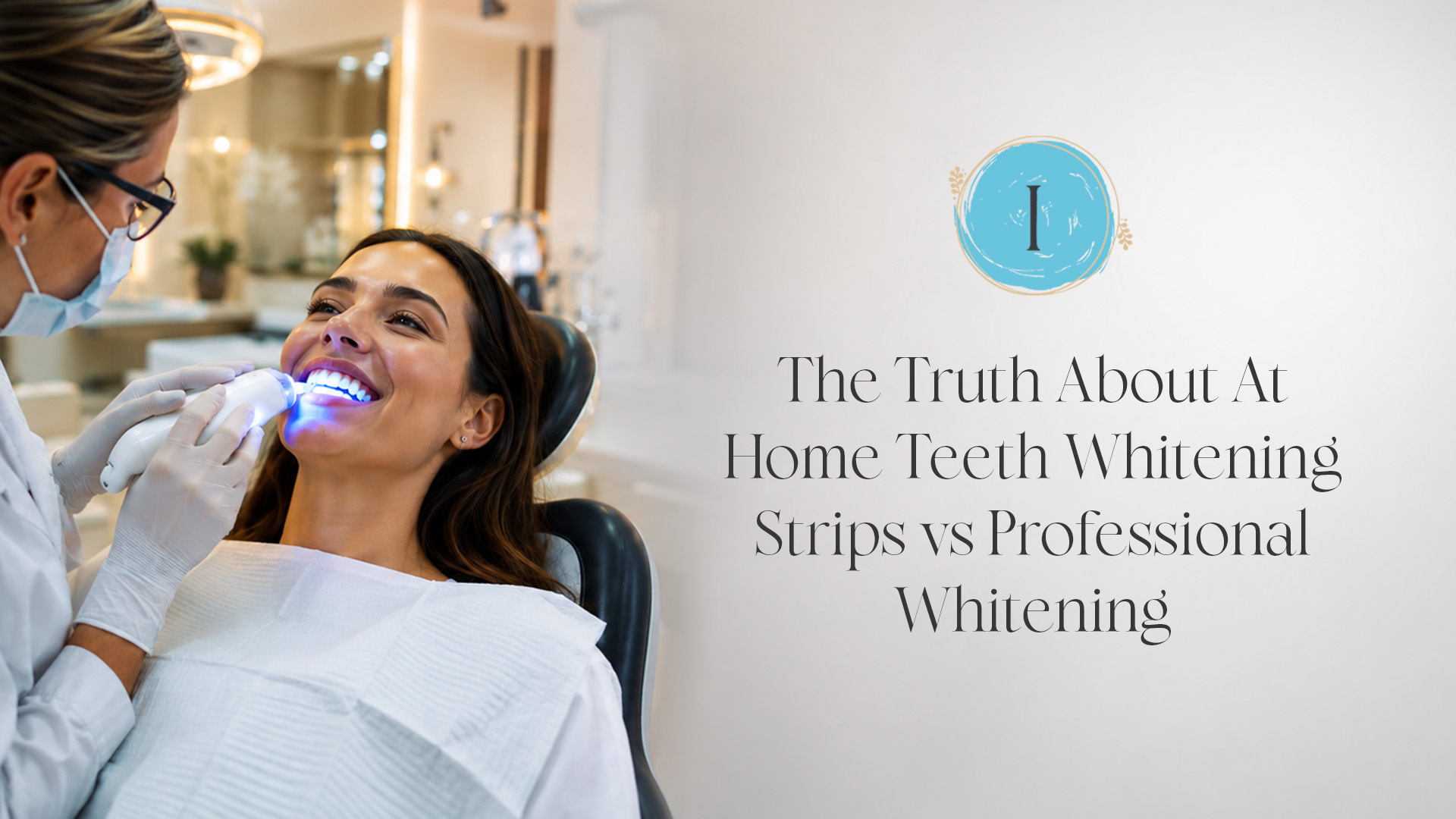
Walk into any supermarket or pharmacy and you will find an entire shelf dedicated to teeth whitening products. Strips, trays, toothpastes, pens, LED kits, charcoal powders. The marketing is compelling, the price points are accessible, and the before and after photos on the packaging look genuinely impressive. So why do so many people try these products, see minimal results, and eventually end up in the chair of a professional whitening clinic anyway?
The answer comes down to chemistry, concentration, and the science of how teeth actually become stained in the first place.
Tooth discolouration falls into two main categories. Extrinsic staining occurs on the outer surface of the enamel and is caused by pigmented compounds in food and drink. Coffee, tea, red wine, and dark berries are the most common culprits. These stains sit on or just within the enamel and are generally more responsive to whitening agents.
Intrinsic staining is more complex. It occurs within the tooth structure itself, often as a result of ageing, certain medications (particularly tetracycline antibiotics taken during childhood), trauma, or fluorosis. This type of staining is significantly harder to address and does not respond to most over the counter products regardless of how long you use them.
Understanding which type of discolouration you are dealing with is the first step toward choosing the right solution.
The active ingredient in almost all whitening products, whether professional or consumer grade, is a peroxide compound. Most commonly this is hydrogen peroxide or carbamide peroxide, which breaks down into hydrogen peroxide when it contacts saliva.
Here is the critical difference: in Australia, over the counter whitening products are legally limited to a maximum concentration of 6 percent hydrogen peroxide. Professional whitening treatments, administered by trained clinicians, can use concentrations significantly above this threshold. At higher concentrations, the peroxide molecules penetrate the enamel more effectively, reaching the dentinal tubules within the tooth where many stains are locked.
This is not a minor difference. It is the difference between surface level brightening and genuine colour change at a structural level.
Whitening strips have improved considerably over the years and they do produce results in some cases. But they come with a set of limitations that are rarely disclosed on the packaging.
First, the fit is generic. A strip cannot conform to the natural contours of your teeth, which means coverage is often uneven. The edges and contact points between teeth, where staining is frequently concentrated, are often completely missed.
Second, extended use of lower concentration peroxide products can paradoxically lead to enamel sensitivity without achieving meaningful whitening. The peroxide is in contact with the enamel long enough to cause dehydration and sensitivity but not long enough or at a sufficient concentration to produce the oxidation reaction needed to lift deep staining.
Third, these products do not contain the conditioning agents that professional formulas include to protect the enamel and gum tissue during the whitening process. The result can be increased sensitivity and tissue irritation, particularly with repeated use.
Professional teeth whitening at a clinic like Iluminara Aesthetic is a fundamentally different experience from anything you can replicate at home, and not just because of the higher peroxide concentration.
The treatment begins with a thorough assessment of your teeth and gums to ensure you are a suitable candidate. Your gums and soft tissue are protected during the
procedure with a specialised barrier, which is something no at home kit can replicate. The whitening gel is applied precisely and evenly by a trained clinician, ensuring consistent coverage across all visible surfaces.
LED light activation accelerates the whitening reaction, allowing the active ingredients to penetrate the enamel more efficiently in a controlled timeframe. This means a professional session of around an hour can achieve results that would take weeks of daily at home use to approximate, if they are achievable at all.
The conditioning and remineralisation step at the end of a professional treatment helps to close the enamel pores that open during the whitening process, significantly reducing post treatment sensitivity and helping to lock in the results.
Professional whitening results typically last between six months and two years depending on lifestyle factors. Regular coffee and tea consumption, smoking, and red wine will shorten the longevity of any whitening treatment. Maintaining results with a good oral hygiene routine, limiting staining beverages, and using a whitening toothpaste for maintenance can extend the effects considerably.
Many clients at Iluminara Aesthetic opt for a touch up treatment every six to twelve months to keep their smile looking its best. This is a far more cost effective and enamel friendly approach than the cycle of buying and discarding at home products that deliver inconsistent results.
The bottom line is this: if you are serious about achieving a genuinely brighter, more even smile, professional whitening is not just a more luxurious version of what you can buy at the supermarket. It is a clinically different treatment that operates at a level the consumer market simply cannot match. Book a consultation with the team at Iluminara Aesthetic and find out what is actually possible for your smile.