
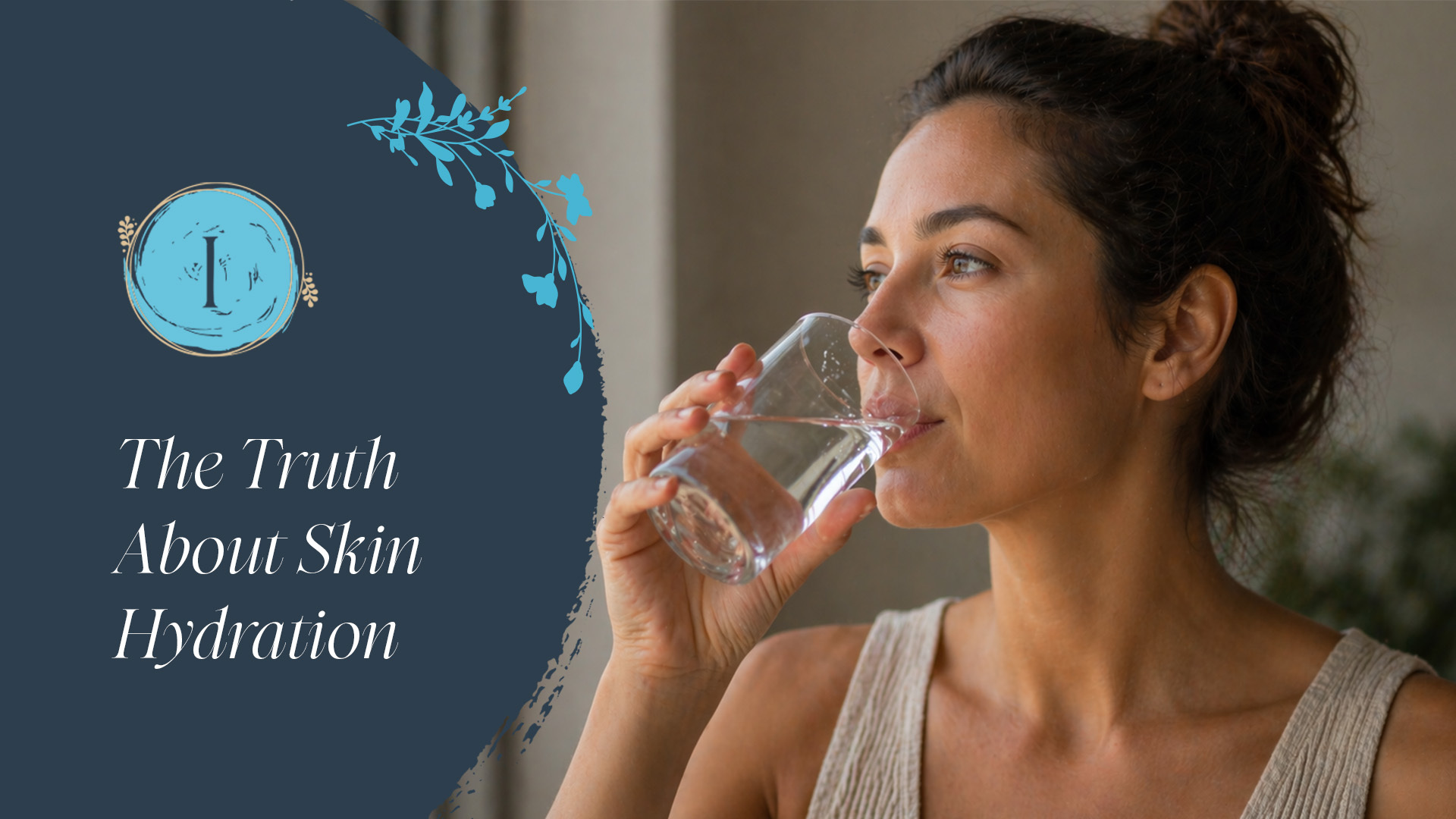
We have all heard it. Drink more water for better skin. It is advice that sounds simple and logical, and while staying hydrated is genuinely important for your overall health, the reality of how your skin gets and stays hydrated is a little more nuanced than your water bottle might suggest.
If you have been drinking your two litres a day and still struggling with dry, dull, or dehydrated skin, you are not alone. Here is the truth about skin hydration and what you can actually do about it.
Your body is remarkably good at directing water where it needs to go, but the skin is the last organ in line. When you drink water, it is absorbed through the digestive system and distributed to the organs that need it most. By the time hydration reaches the outermost layers of your skin, the effect is minimal.
This does not mean you should stop drinking water. Dehydration absolutely affects your skin and your health overall. But relying on water consumption alone to fix your skin is a bit like expecting a house plant to thrive from rain falling outside. The water needs to get directly to the roots.
This is a distinction that makes a real difference to how you approach treatment.
Dry skin is a skin type. It refers to skin that does not produce enough natural oil (sebum). It tends to feel rough, tight, and flaky, and it is largely determined by genetics and hormones.
Dehydrated skin is a skin condition. It means your skin is lacking water, not oil, and it can affect any skin type, including oily skin. Dehydrated skin often looks dull, feels tight, and can show fine lines more prominently. It is usually influenced by external factors like weather, diet, lifestyle, and your skincare routine.
Knowing which one you are dealing with changes everything about how you treat it.
Hydration in the skin depends on something called the moisture barrier, or skin barrier. This is the outermost layer of your skin, and its job is to hold water in and keep irritants out. When the barrier is healthy, your skin stays plump and comfortable. When it is compromised, water escapes and skin becomes reactive, tight, and dull.
Supporting your moisture barrier comes down to a few key things: using the right skincare ingredients, protecting your skin from environmental stressors, and in some cases, turning to professional treatments that work at a deeper level than topical products can reach.
Not all moisturising ingredients are created equal. Here are the ones worth paying attention to.
Hyaluronic acid is one of the most effective hydrating ingredients available. It is a naturally occurring substance in the body that can hold up to a thousand times its weight in water. When applied topically, it draws moisture into the skin and helps it stay there. Look for it in serums and moisturisers.
Ceramides help rebuild and reinforce the skin barrier, reducing water loss over time. They work best when used consistently as part of a regular routine.
Niacinamide improves barrier function, calms redness, and helps regulate sebum production, making it a useful ingredient for a wide range of skin types.
Glycerin is a classic humectant that attracts moisture to the skin and is gentle enough for even sensitive skin types.
Sometimes, the skin needs more than what a bottle can deliver. This is particularly true for skin that has been chronically dehydrated, damaged by sun exposure, or affected by ageing, which naturally reduces the skin’s ability to retain moisture.
Professional treatments can make a significant difference in these cases. Skin boosters, for example, are injectable treatments that deliver hyaluronic acid directly into the skin, providing deep, lasting hydration that topical products simply cannot replicate. The results are often visible within days and can last for several months.